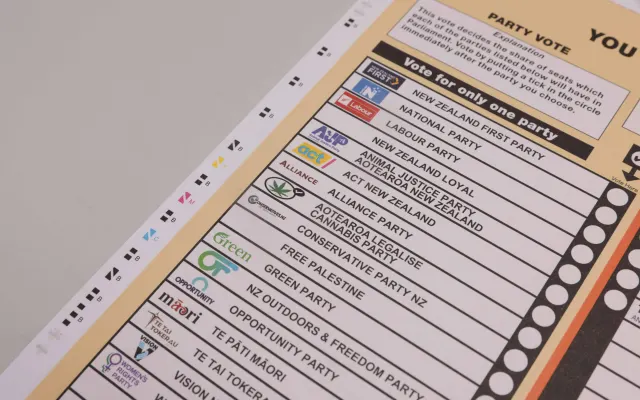
New Zealanders were greeted this morning with an emergency mobile alert from the sitting coalition government, thanking them profusely for taking the time to participate in the triennial democracy survey.
The survey, which every three years seeks to gauge New Zealanders’ opinion on what their government should look like, before ostensibly taking it somewhat into account, was completed by roughly 75% of the country’s employees yesterday.
Those who declined to fill out the survey were free to do so, and this year even encouraged, with the Government reiterating that it was “just a formality” and “you really don’t have to.”
Back in September, New Zealand’s head of internal communications, Paul Goldsmith, sought to reiterate the optional nature of the survey.
“It’s just a silly little bit of paper,” he said. “I mean, I don’t even know why we do it really, so if you don’t want, we’re very happy for you not to.”
Goldsmith said that if people really wanted to do the survey, they should let him know two weeks in advance, otherwise he may not even be able to get them the papers.
“Truly,” he said, “no one does this. So we haven’t printed that many. So if you decide at last minute, ohhhh I really want to do this survey, then you might be out of luck.”
Asked at the time whether the survey was anonymous, Goldsmith replied “Absolutely, yes.”
“Of course,” he added, “you never really know, do you? I mean, it’s supposed to be. But who knows what might get out there?”
The results of the survey, released last night, were fairly mixed, and the Government has reiterated that while feedback is both welcome and valuable, there are a number of factors and operational realities that will determine any final decisions around management, roles, and ongoing relevance.
It is understood most of the operational realities are Winston Peters.